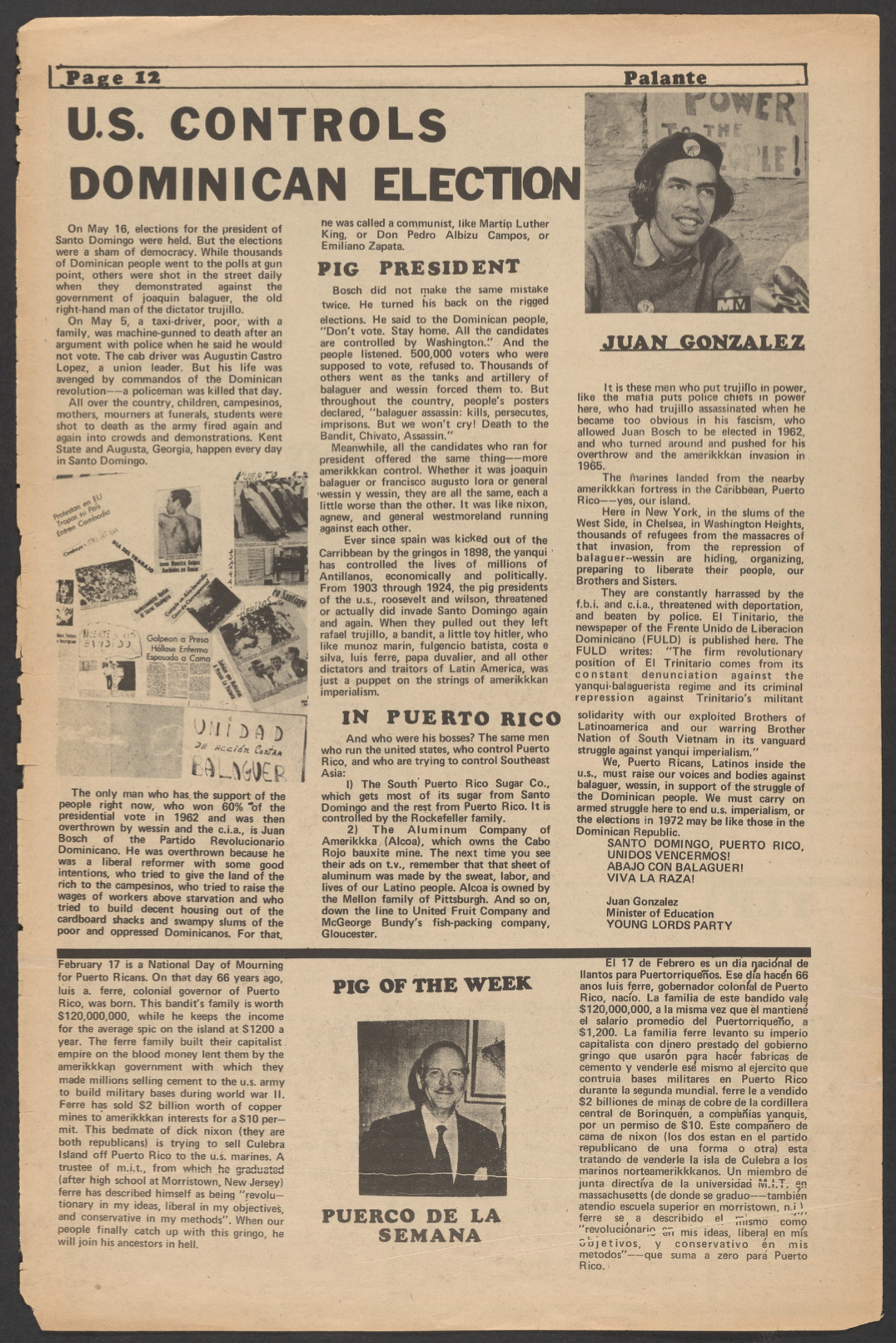
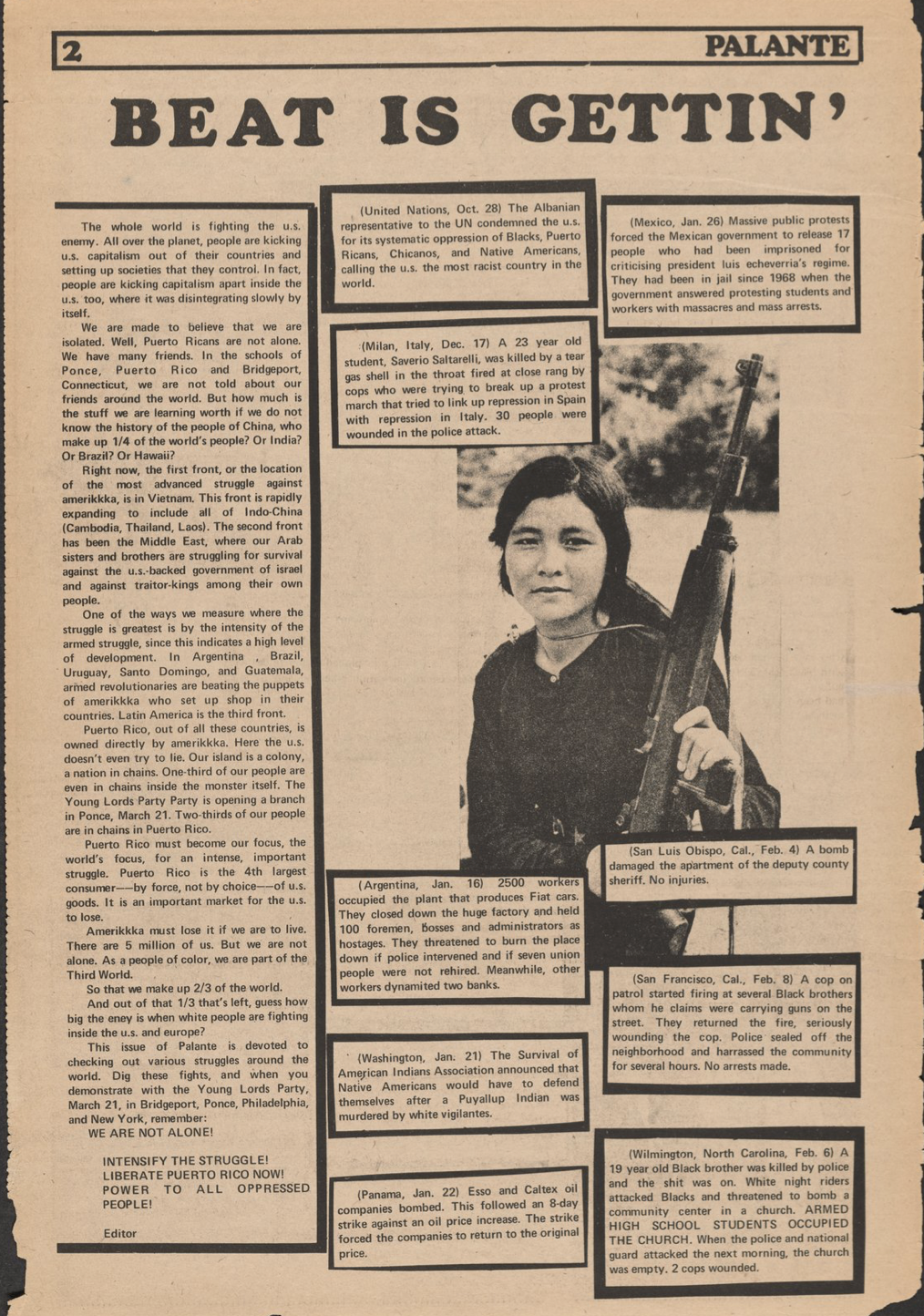
A global approach:
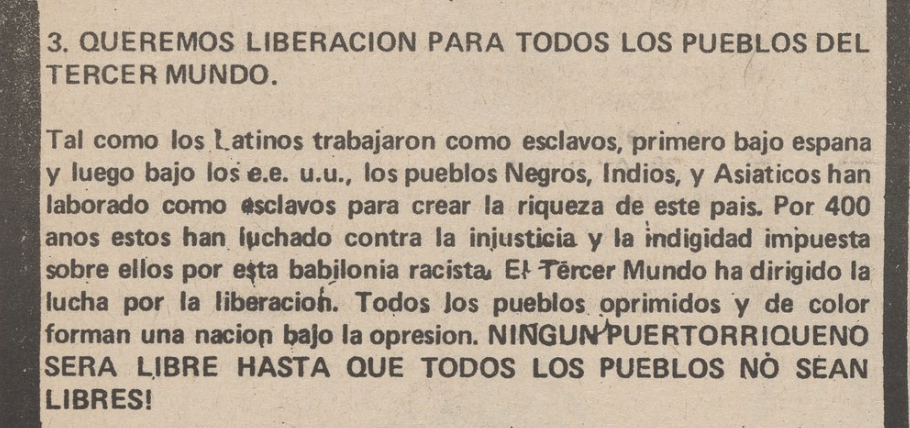
3. We want liberation of all third world people .
Just as Latins first slaved under spain and the yanquis, Black people, Indians, and Asians slaved to build the wealth of this country. For 400 years they have fought for freedom and dignity against racist Babylon (decadent empire). Third World people have led the fight for freedom. All the colored and oppressed peoples of the world are one nation under oppression.No Puerto Rican Is Free Until All People Are Free!
As emphasized in the 3rd point within their 13 Point Program, the Young Lords’ activism was for not only for a liberated Puerto Rico, but liberation for all oppressed third-world people around the globe
Lessons From Global Revolutionaries
One of the most interesting things about the Palante newspaper was their inclusion of global stories within their political education curriculum. As demonstrated by the 3rd point in the YLP 13 Point Program, liberation was a collective struggle throughout the world. There were ways in which the YLP could use and learn from other global revolutionaries while building a base of solidarity amongst all third world peoples under imperialism.
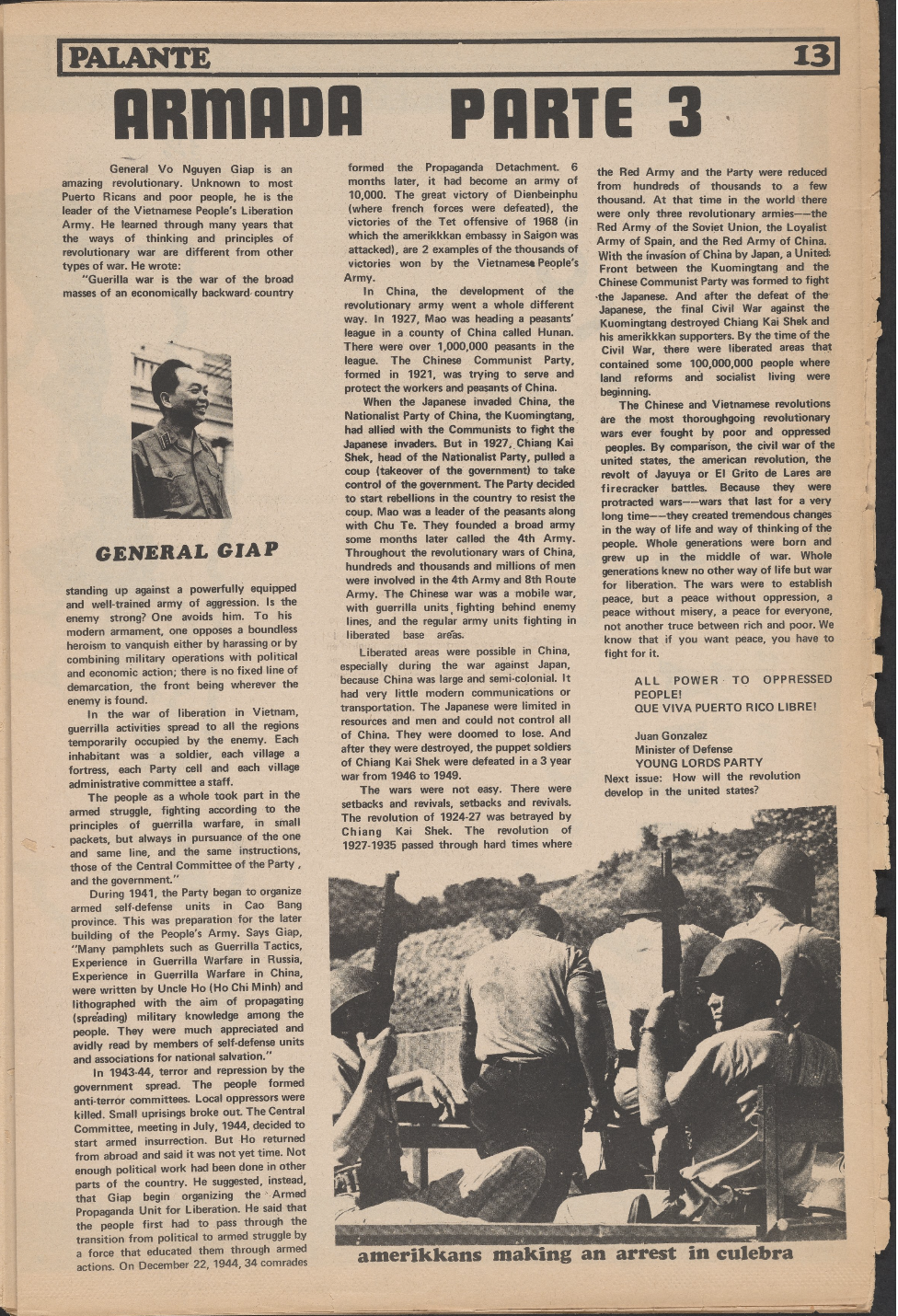
The YLP highlights the success of the Chinese Revolution to demonstrate the possibility of real change to its base. They highlight the improvements in education and medicine, real issues that are relevant to working-class Puerto Ricans across the world in New York. Through this, Palante not only educates on similar movements internationally, but they create a real sense of radical optimism and a shared understanding that when people are adequately organized, real tangible change can occur.
Importantly, the YLP connects the occurrences abroad to the struggle both on-ground in NYC and Puerto Rico. By highlighting the shared “amerikkan” imperial enemy, the revolutionary struggles in Asia are instantly resonant to the liberation of Puerto Rico. In this article, Palante highlights that all anti-imperial struggles under capitalism are inherently connected, and a revolutionary should be informed of the history and struggles around the world to best inform their own movement.
It is also important to note Mao’s appreciation for the power of the literature and art of the masses and its place within a revolutionary project. In his Talks at the Yenan Forum on Literature and Art, Mao highlights literature as a “cog and wheel” in the revolutionary cause. It is thus clear that the YLP did not organize their movement in a vacuum, but instead were informed and wanted to inform their own base of the lessons from previous radical movements, especially those that found real successes.
Revolutionary literature and art are part of the whole revolutionary cause, they are cogs and wheels in it, and though in comparison with certain other and more important parts they may be less significant and less urgent and may occupy a secondary position, nevertheless, they are indispensable cogs and wheels in the whole machine, an indispensable part of the entire revolutionary cause. If we had no literature and art even in the broadest and most ordinary sense, we could not carry on the revolutionary movement and win victory. Failure to recognize this is wrong.
Mao, 1942
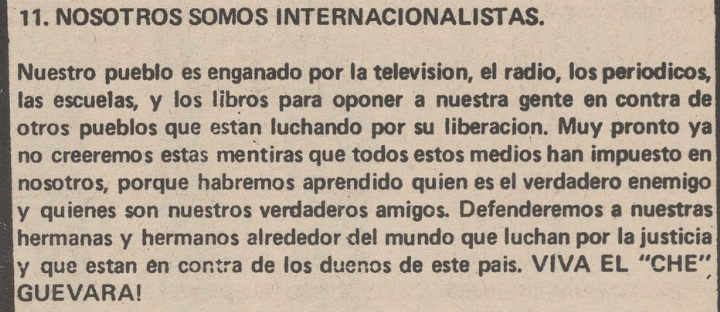
Pt 11, YLP 13 Point Program
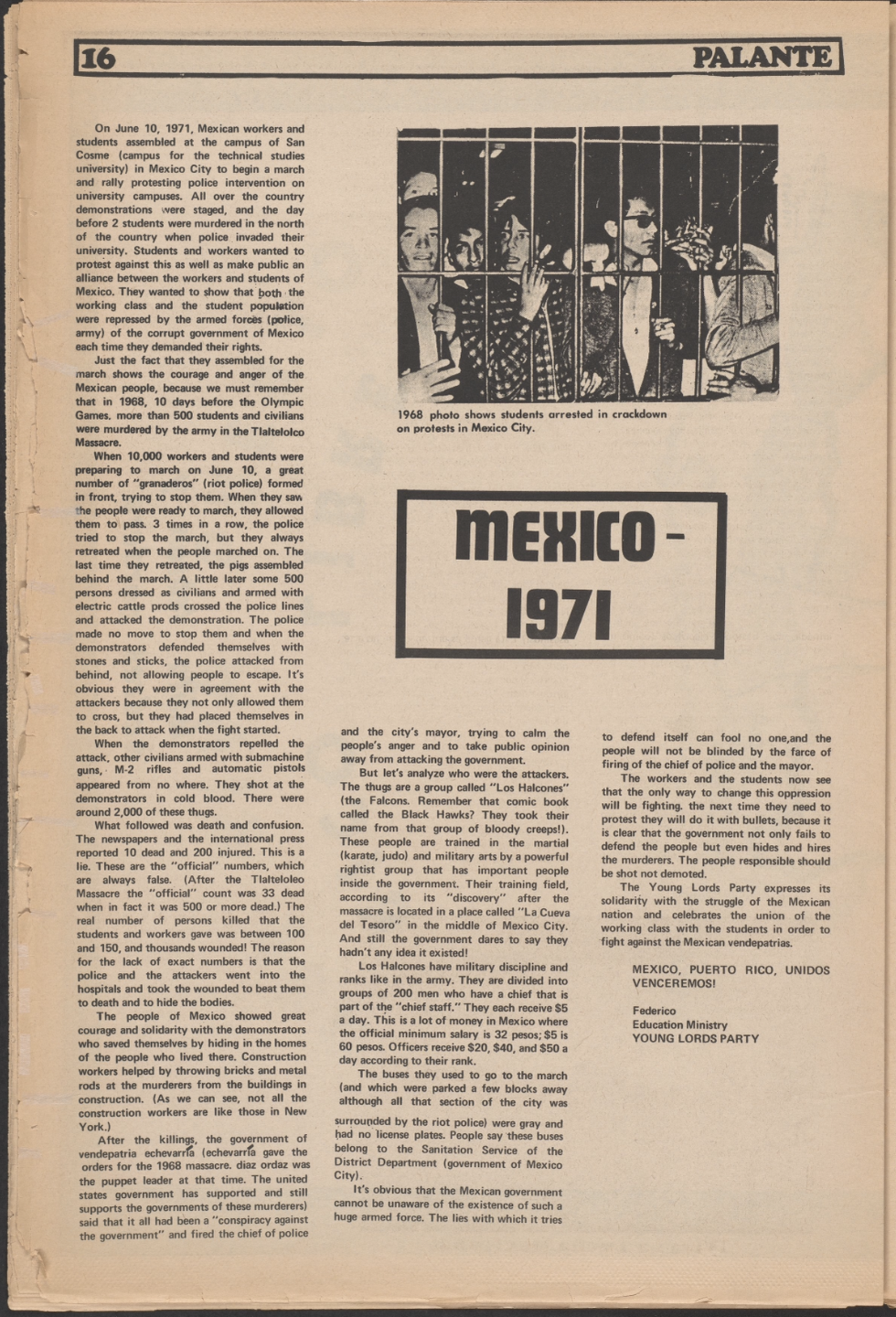
From Palante July 4th - July 18th, 1971
From Palante July 4th - July 18th, 1971
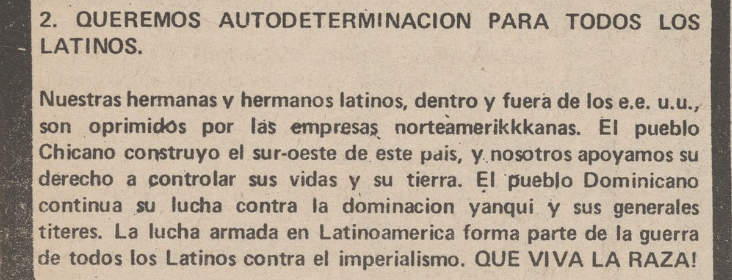
Pt 2, YLP 13 Point Program
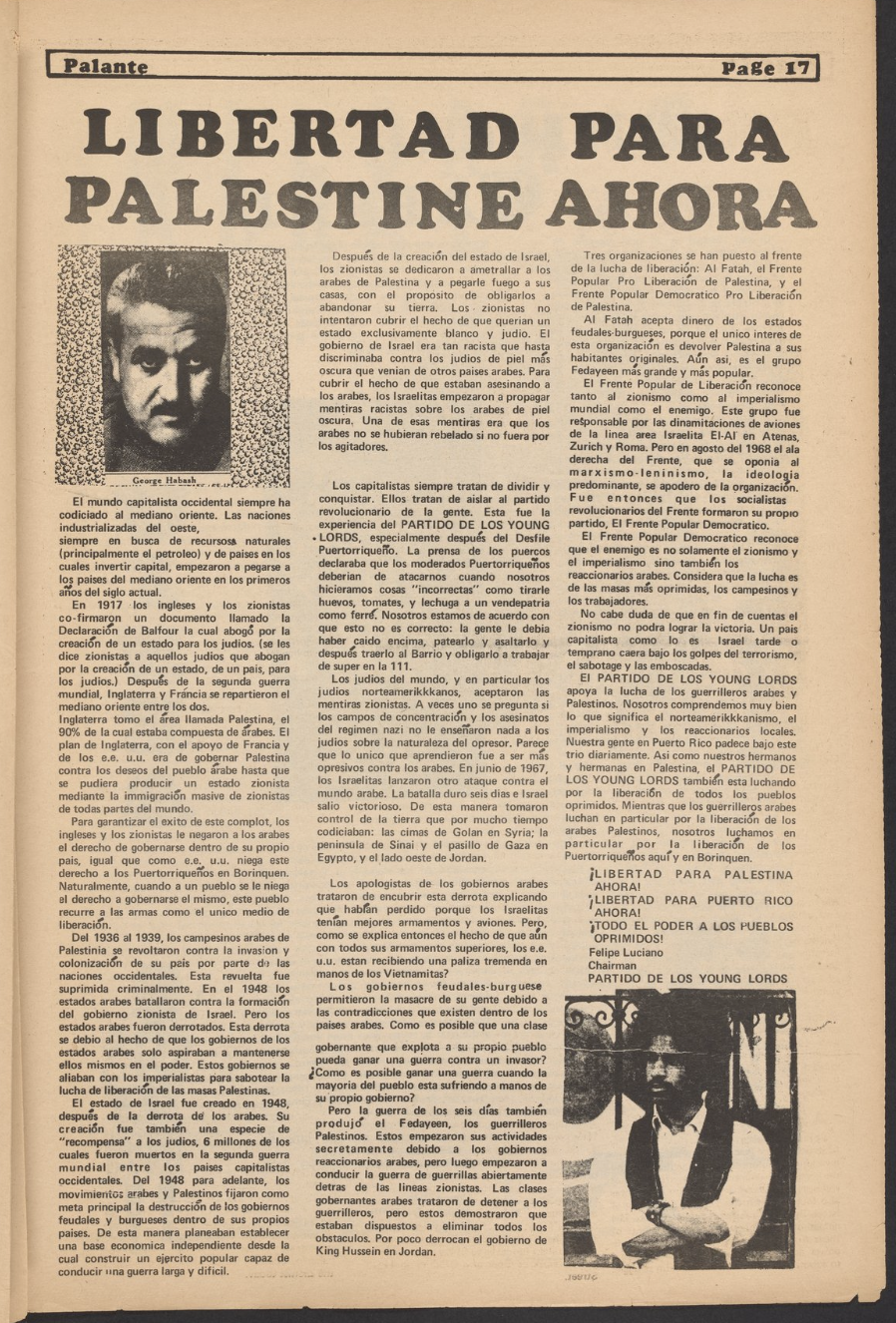
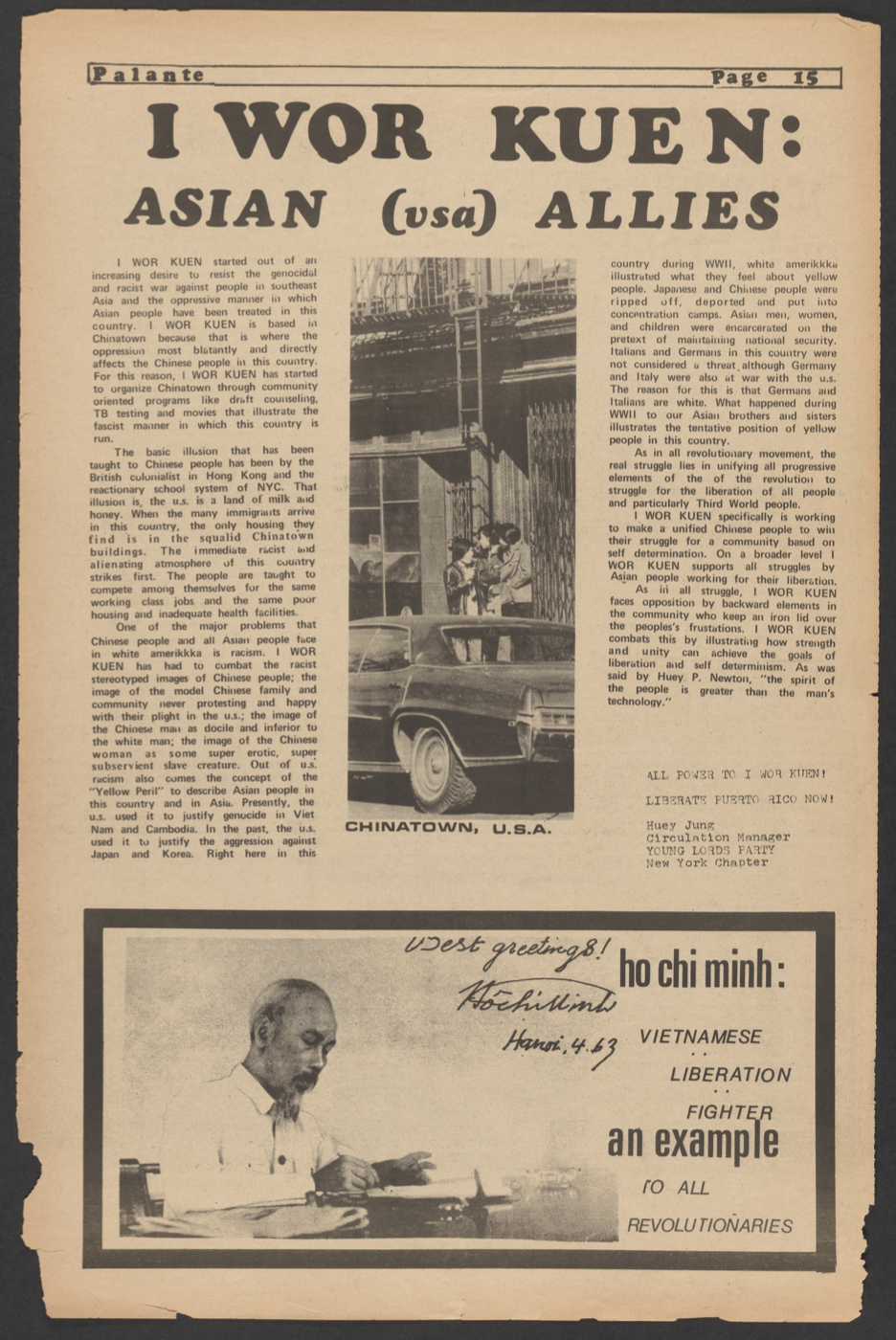
Beyond their promotion of several other global anti-imperial and revolutionary movements, the Young Lords also took measures to ensure that they were supporting similar organizing that was happening within diasporic groups in the United States. They ensured not only in their own organizing, but in their promotion of other organizers, to consistently tie oppression against Brown, Black, and other people of color within the continental US to the global struggle against imperialism.
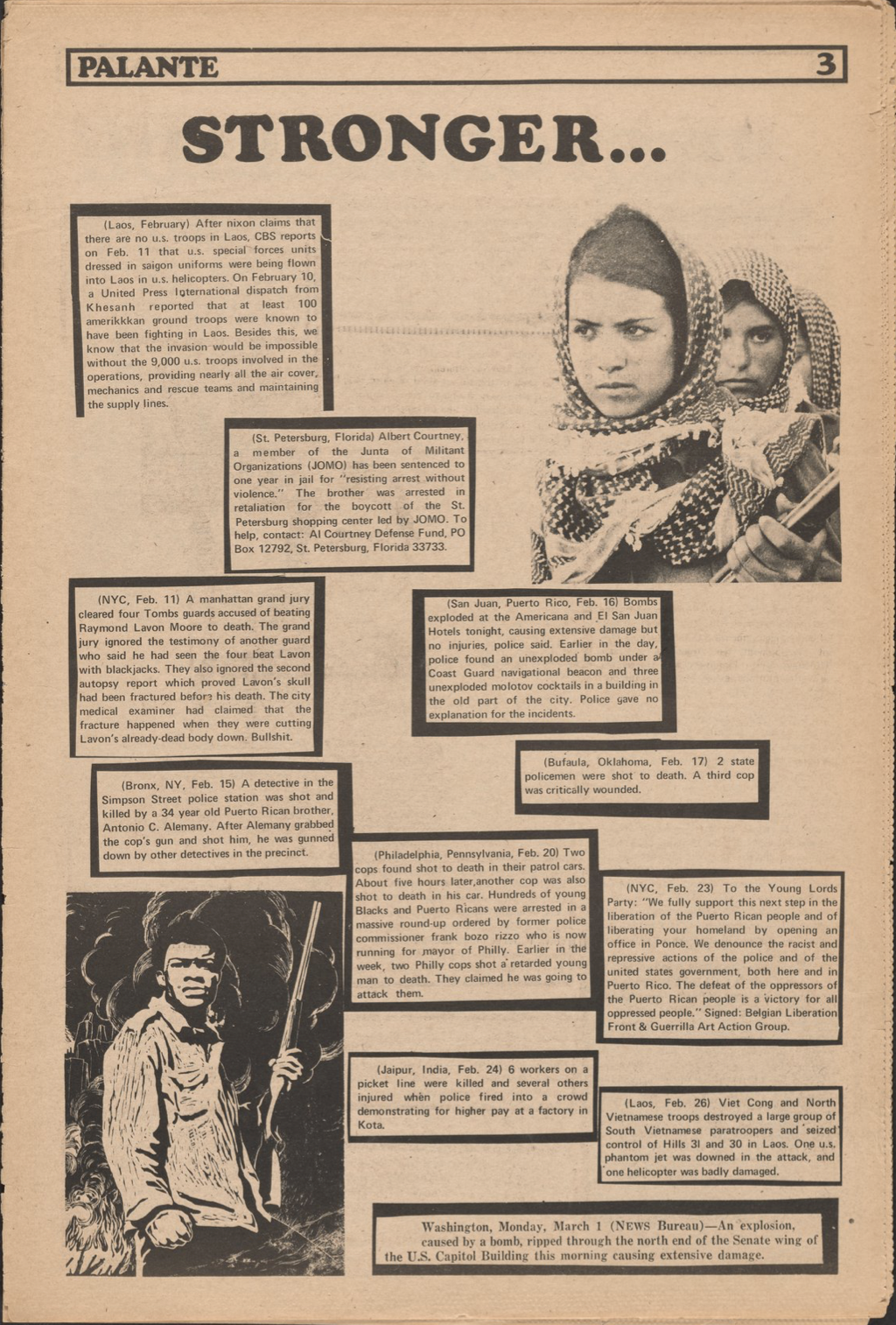
From Palante Volume 3 Number 4, March 5-19, 1971
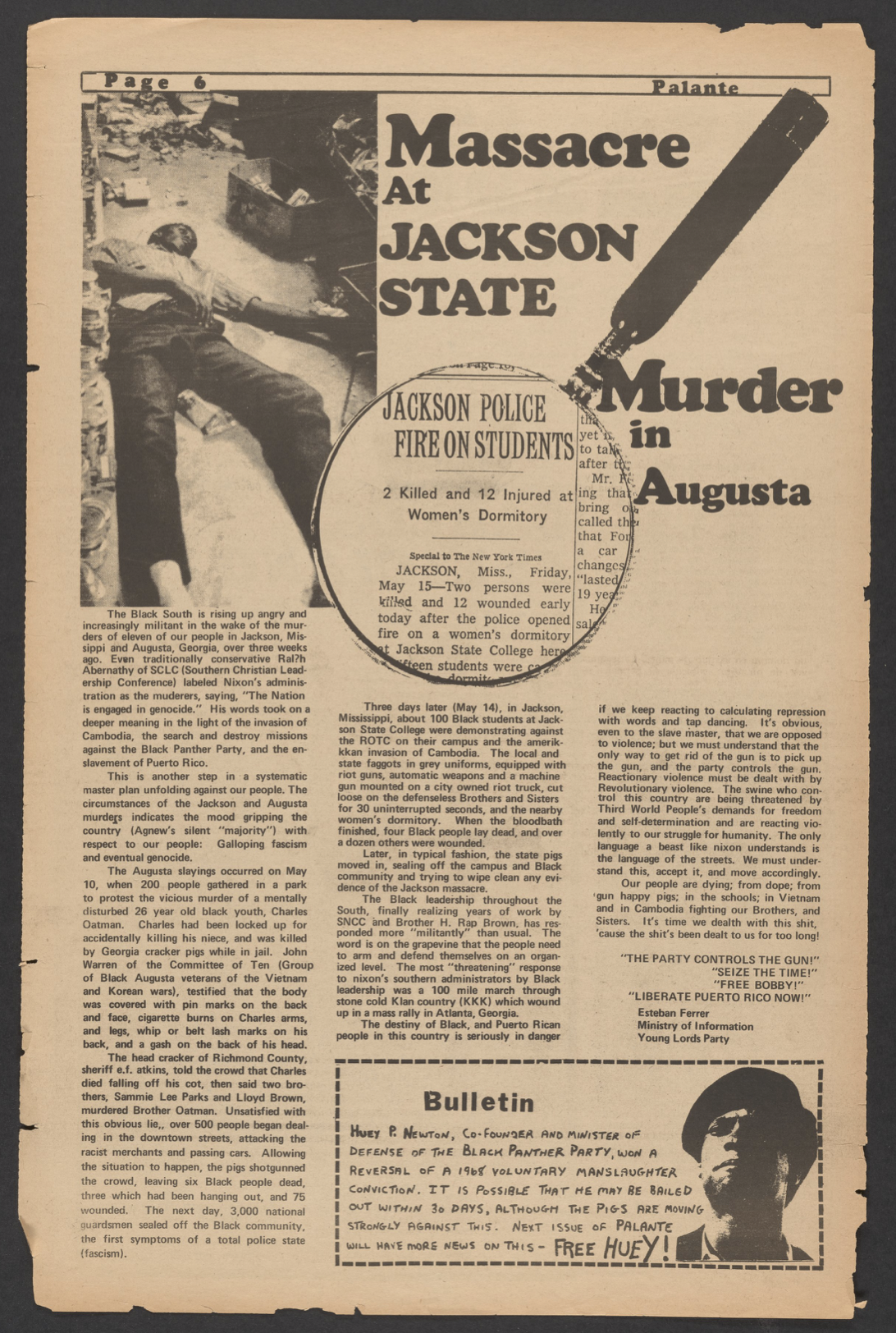
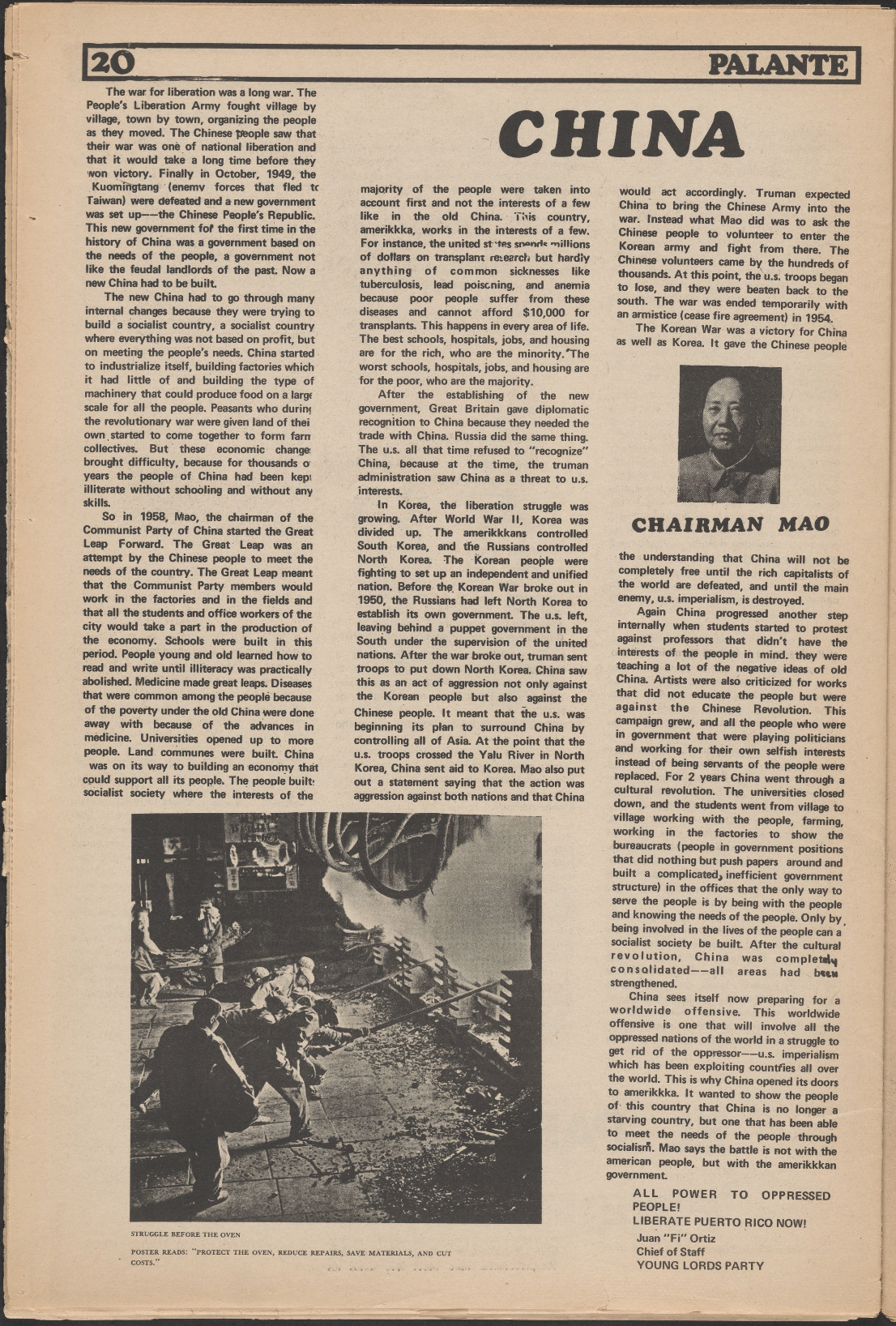
From Palante July 4th - July 18th, 1971
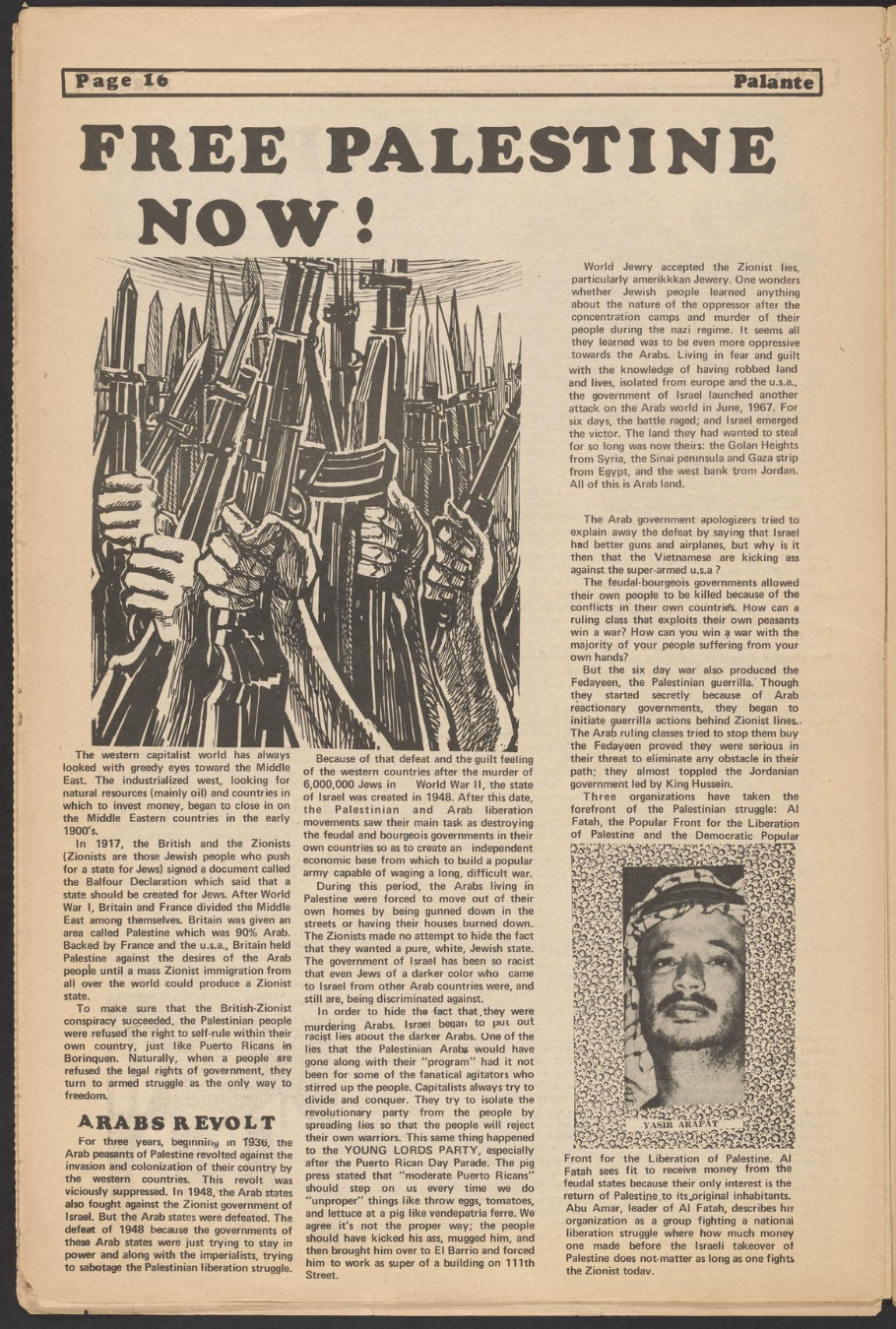
Palante, July 17th, 1970