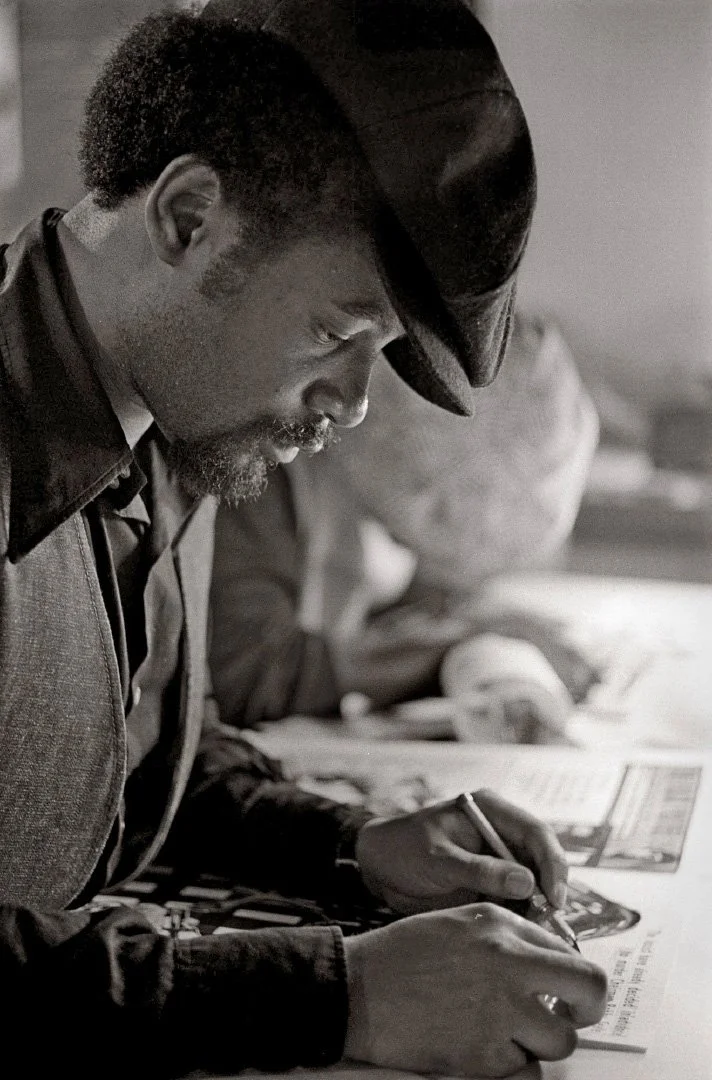
The use of art and written pieces as an Integral facet of revolution was not historically unprecedented. In fact, several other revolutionaries around the world have often taken specific measures to highlight the importance of a visual and written curriculum to accompany and enrich a movement.
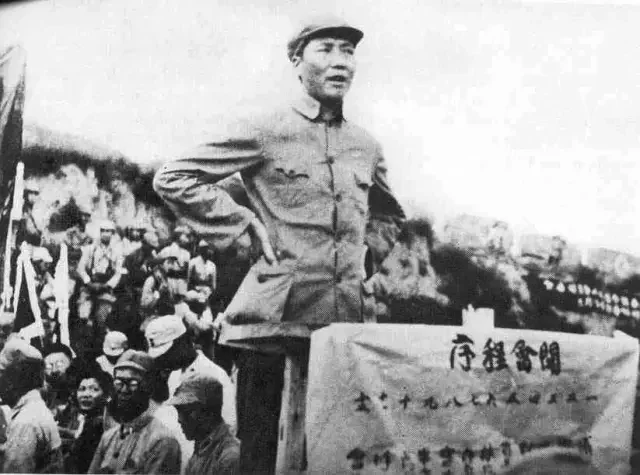
The purpose of our meeting today is precisely to ensure that literature and art fit well into the whole revolutionary machine as a component part, that they operate as powerful weapons for uniting and educating the people and for attacking and destroying the enemy, and that they help the people fight the enemy with one heart and one mind.
Revolutionary literature and art are part of the whole revolutionary cause, they are cogs and wheels in it, and though in comparison with certain other and more important parts they may be less significant and less urgent and may occupy a secondary position, nevertheless, they are indispensable cogs and wheels in the whole machine, an indispensable part of the entire revolutionary cause. If we had no literature and art even in the broadest and most ordinary sense, we could not carry on the revolutionary movement and win victory. Failure to recognize this is wrong.
- Mao Zedong, May 1942
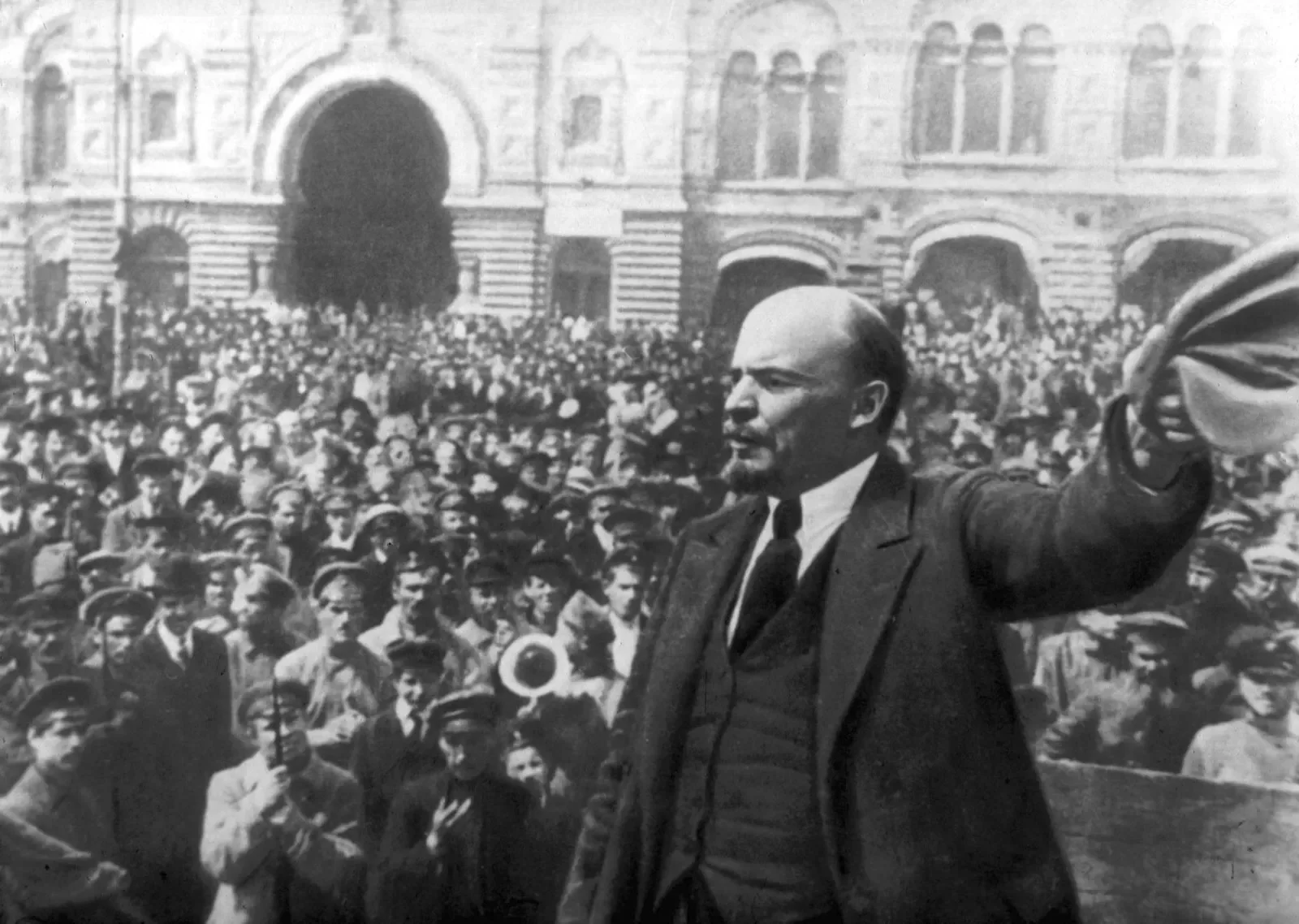
What is this principle of party literature? It is not simply that, for the socialist proletariat, literature cannot be a means of enriching individuals or groups: it cannot, in fact, be an individual undertaking, independent of the common cause of the proletariat. Down with non-partisan writers! Down with literary supermen! Literature must become part of the common cause of the proletariat, “a cog and a screw” of one single great Social-Democratic mechanism set in motion by the entire politically-conscious vanguard of the entire working class. Literature must become a component of organized, planned and integrated Social-Democratic Party work.
Literature must by all means and necessarily become an element of Social-Democratic Party work, inseparably bound up with the other elements. Newspapers must become the organs of the various party organizations, and their writers must by all means become members of these organizations.
- Vladimir Lenin, Party Organization and Party Literature, 1905
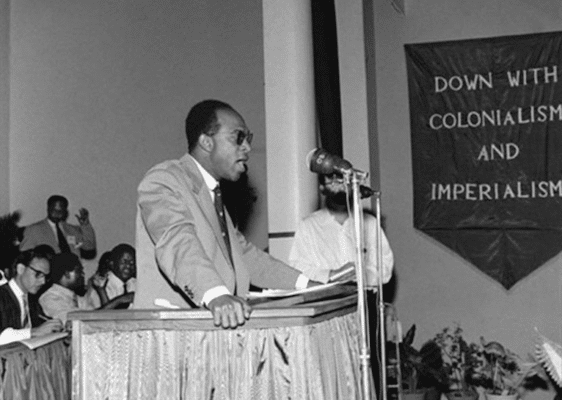
The natives who are anxious for the culture of their country and who wish to give to it a universal dimension ought not therefore to place their confidence in the single principle of inevitable, undifferentiated independence written into the consciousness of the people in order to achieve their task. The liberation of the nation is one thing; the methods and popular content of the fight are another. It seems to us that the future of national culture and its riches are equally also part and parcel of the values which have ordained the struggle for freedom.
- Franz Fanon, On National Culture, 1961
The Revolutionary Artist's talents are just one of the weapons he uses in the struggle for Black People. His art becomes a tool for liberation. Revolutionary Art can thereby progress as the people progresses because the People are the backbone to the Artist and not the Artist to the People.
To conceive any type of visual interpretations of the struggle, the Revolutionary Artist must constantly be agitating the people, but before one agitates the people as the struggle progresses one must make strong roots among the masses of the people. Then and only then can a Revolutionary Artist renew the visual interpretation of Revolutionary Art indefinitely until liberation.
-Emory Douglas, Minister of Culture, Black Panther Party
Position Paper No. 1 on Revolutionary Art, 1968
Just as happens with the flower in a plant, in culture there lies the capacity (or the responsibility) for forming and fertilizing the seedling which will assure the continuity of history, at the same time assuring the prospects for evolution and progress of the society in question. Thus it is understood that imperialist domination, by denying the historical development of the dominated people, necessarily also denies their cultural development. It is also understood why imperialist domination, like all other foreign domination, for its own security, requires cultural oppression and the attempt at direct or indirect liquidation of the essential elements of the culture of the dominated people.
The study of the history of national liberation struggles shows that generally these struggles are preceded by an increase in expressions of culture, consolidated progressively into a successful attempt to affirm the cultural personality of the dominated people, as a means of negating the oppressor culture. Whatever may be the conditions of a people’s subjection to foreign domination, and whatever may be the influence of economic, political and social factors in practicing this domination, it is generally within the culture that we find the seed of opposition, which leads to the structuring and development of the liberation movement.
-Amílcar Cabral, National Liberation and Culture, delivered 1970