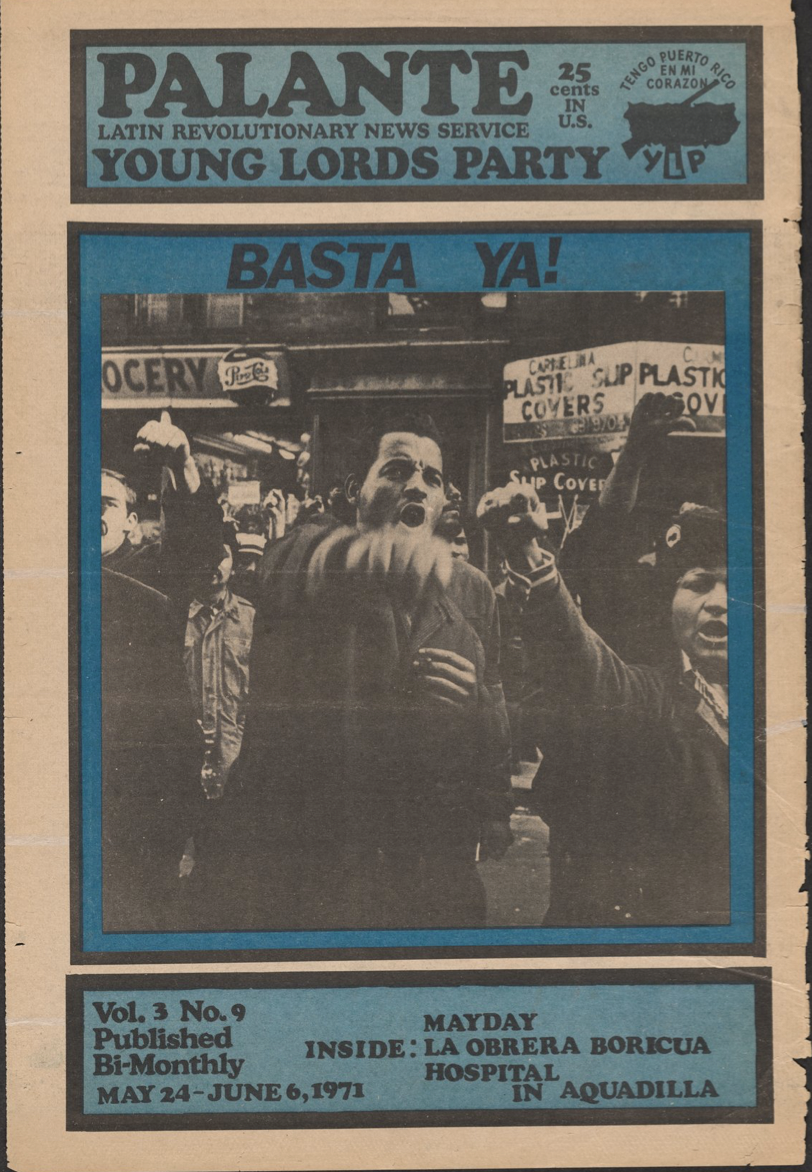
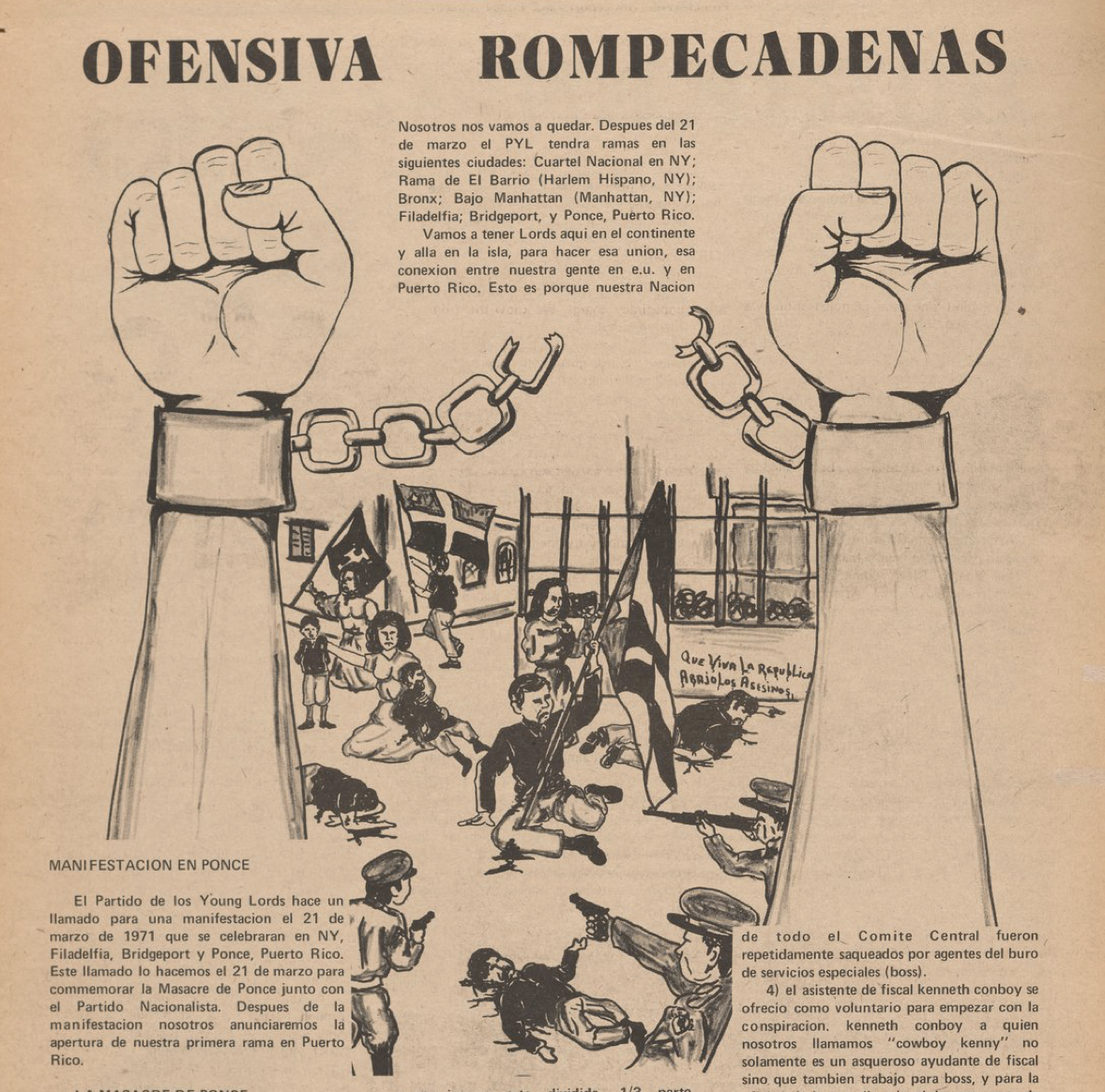
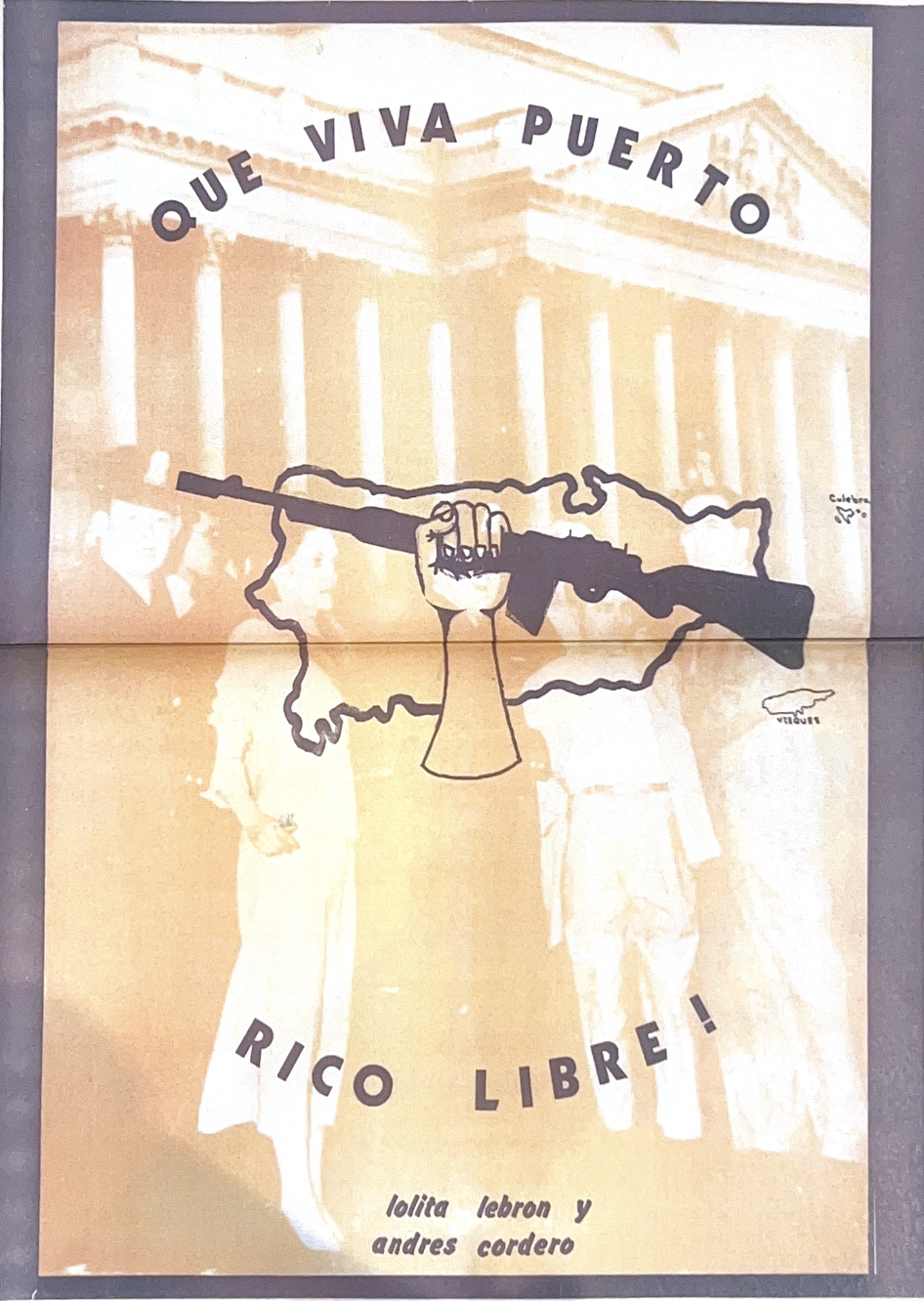
Revolutionary Art is a returning from the blind, whereas we no longer let the oppressor lead us around like watchdogs.
- Emory Douglas, 1968, Position Paper #1 on Revolutionary Art
It is no secret that much of the organizational structure of the Young Lords Party originates from Black Power politics, specifically the Black Panther Party (BPP.) The politicization of the Young Lords began in Chicago in the late 60s, after José “Cha Cha” Jimenez was introduced to radical Black politics during his many stints in prison (Fernandez, 36.) Cha Cha meeting Fred Hampton, the leader of the Chicago BPP became a catalyst for the eventual politicization of the Chicago Young Lords Organization, who would go on to adopt a similar 13 point political program and create their own programs modeled after the BPP’s Free Breakfast Program (Fernandez, 45.) Cha Cha felt a similar need for community self defense to be a priority amongst the Puerto Ricans in Chicago, but recognized the importance of collaboration amongst other oppressed peoples, joining the Rainbow Coalition which consisted of the Black Panther Party, The Young Lords Organization, and the The Young Patriots (Fernandez, 48.) This coalition was one of the first of its kind, and an impressive feat amongst the deeply divided racial politics on the ground in post-war Chicago.
The political discipline and boldness of the Young Lords in Chicago inspired several New York Puerto Ricans, dialectically called “Nuyoricans” to create their own version of the organization (Fernandez, 49.) These mostly college educated but working class Puerto Rican youth in New York City met with Cha Cha and eventually began their own, politicized branch of the Young Lords, which they called the Young Lords Party (YLP.) This history is important to illustrate the role of Black radicalism in the eventual development of the YLP as a revolutionary, politicized group.
A key tenet of the Black Panther Party is the focus on material propaganda and revolutionary art as a means of ground-level education and illustration of popular demands against Yankee and global imperialism. BPP Minister of Culture, Emory Douglas writes in his 1968 Position Paper 1 on Revolutionary Art:
Revolutionary Art gives a physical confrontation with tyrants, and also enlightens the people to continue their vigorous attack by educating the masses through participation and observation.
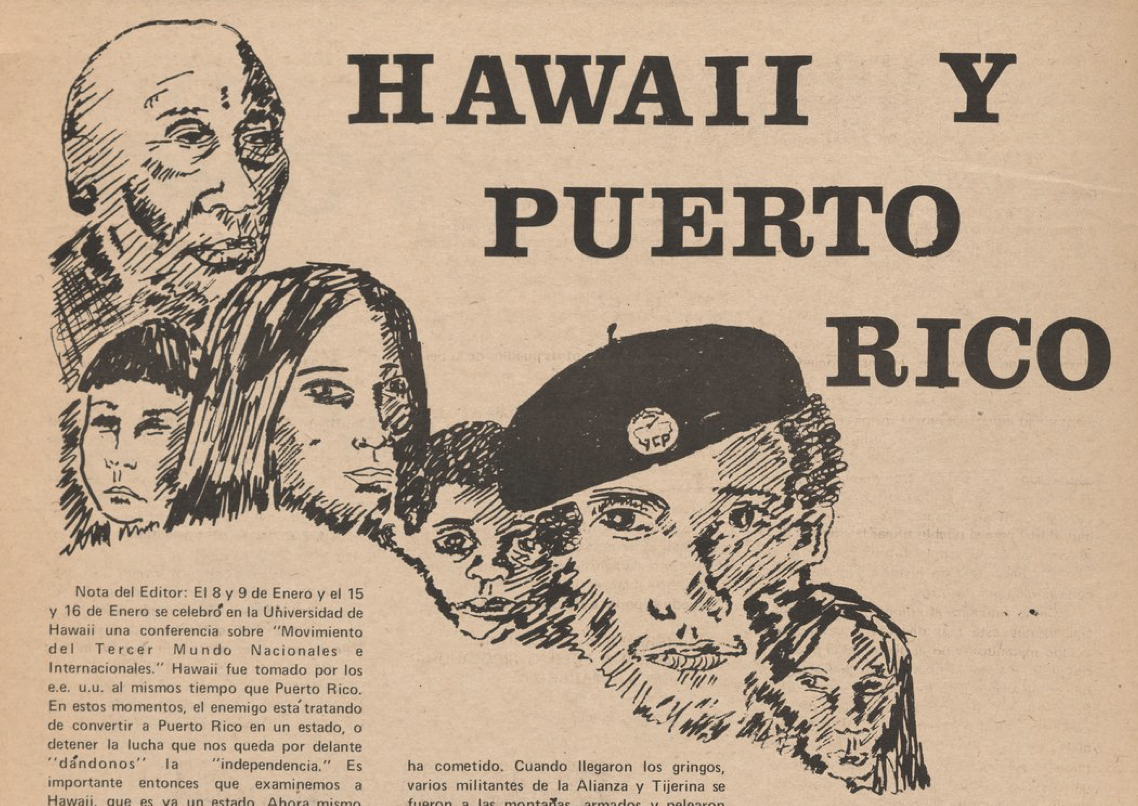
The pig imagery, with the pig representing the cop, the yankee, the imperialist, was developed by Douglas, but through the radical coalition building between the YLO and BPP, the pig was adopted amongst the Chicago Young Lords (Fernandez, 41.) In New York, the YLP’s Palante features heavy uses of the pig as a symbol of Yankee imperialism and global oppression. The popular newspaper regularly features “Pig of the Week” or “Puerco de la Semana,” columns calling out corruption in the form of cops, city administrators, etc. Further, the back covers of Palante seem directly in line with Douglas’s messaging on revolutionary art. The back covers contain poster-style art designed to be cut out and posted on city or bedroom walls, telephone poles, or wherever the masses see fit.
Selection of revolutionary art Featured in palante
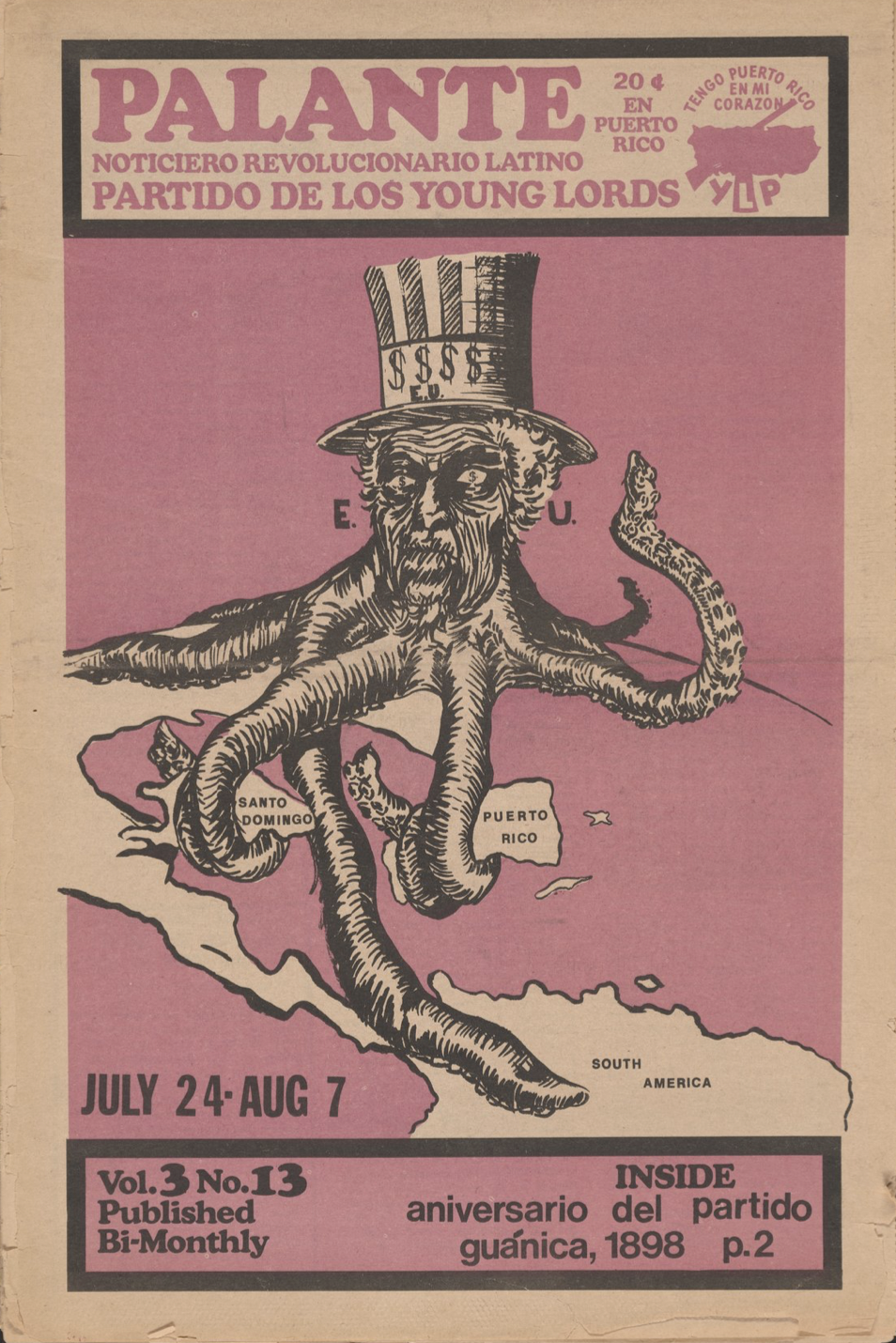
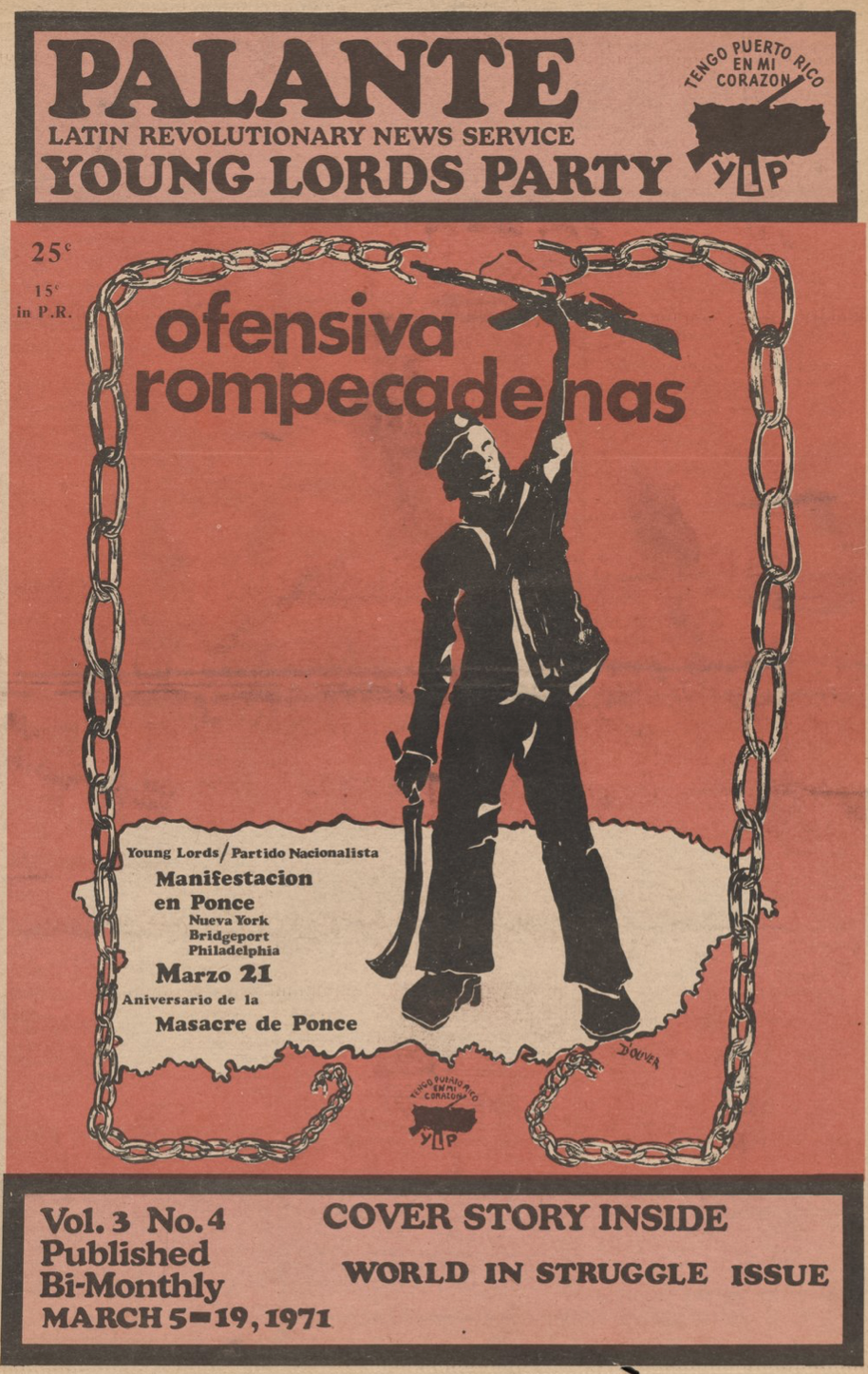
July 24, 1971
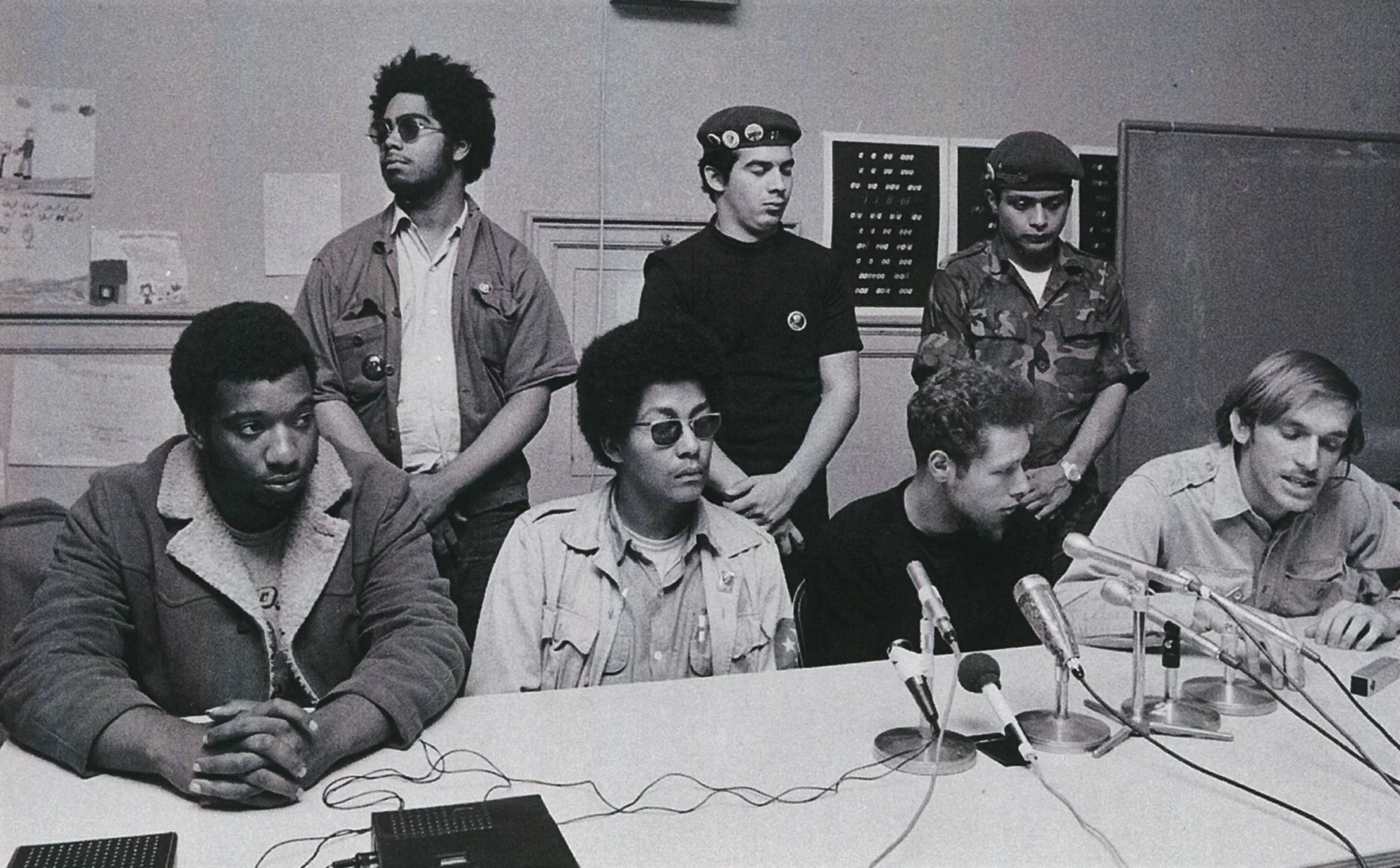
Rainbow Coalition Meeting, Chicago 1969
Photo curtesy of Cha Cha Jimenez
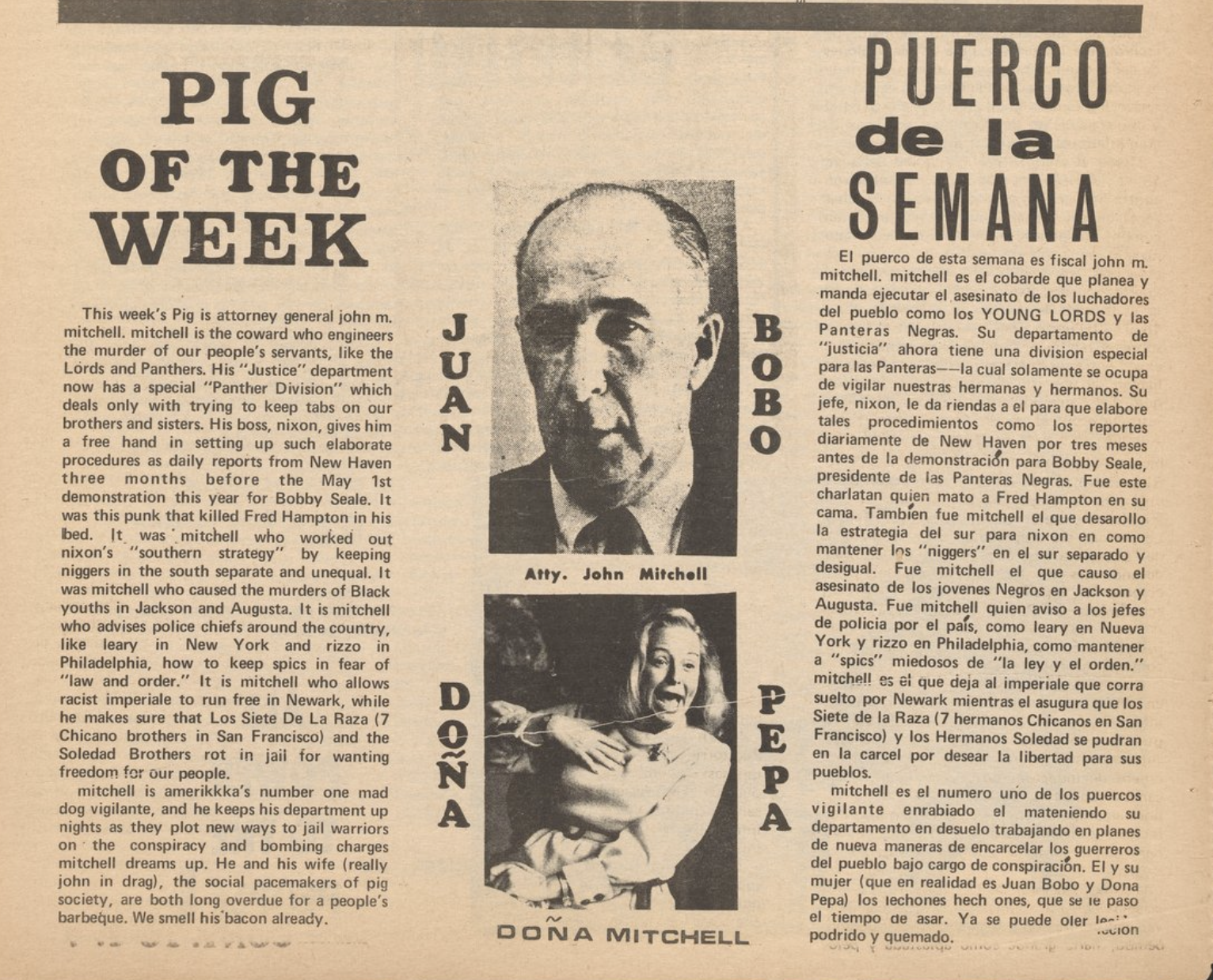
From Palante Volume 2 Number 7, July 17th, 1971
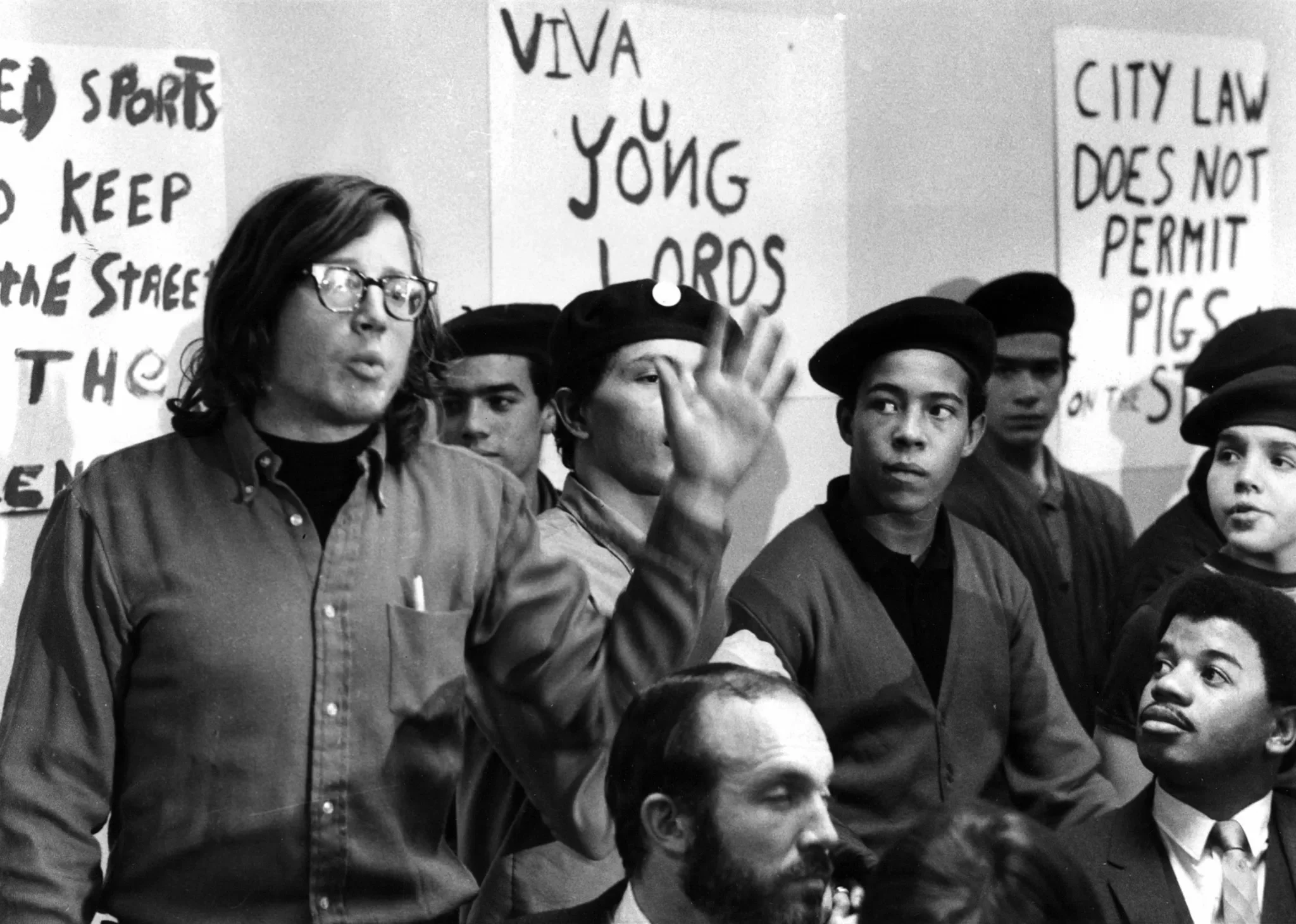
The YLO at the Eighth Police District Community Council meeting. Sign reads “Viva Young Lords,” “Pigs need support centers to keep them off the streets” and “City law does not permit pigs on the street.”